
Top 12 Best Brush Cutter Blade for Weed Eater Revealed!
Spending more time fixing a dull, bent, or mismatched blade than actually cutting weeds is a familiar frustration for anyone who has tried using a cheap blade. The best brush cutter blade for weed eater can make the difference between smooth cutting and constant snagging or stalling. A blade that doesn’t fit properly or isn’t made for the vegetation you are tackling quickly becomes more of a headache than a tool.
Good brush cutter blades are typically made from high-carbon steel or a steel alloy that holds up better against wear and impact. Standard sizes often range from 8 to 12 inches in diameter, matching the power and size of the weed eater to avoid motor strain. Thickness and the number of teeth affect cutting strength and speed, while a secure fit with the correct mounting hole size is essential for safety and effective operation.
Need a Quick Check?
| Image | Product | Price |
|---|---|---|
Our Top Picks 1  | HK 9 36T Carbide Blades | Check Price |
Our Top Picks 2  | HK 9 36T Carbide Blades | Check Price |
Our Top Picks 3  | 3-in-1 Brush Cutter Set | Check Price |
Our Selected Top 12 Brush Cutter Blade for Weed Eater Worth Your Money
This list features durable and efficient brush cutter blades designed for various weed eater models. Each review covers performance, suitability for different tasks, and highlights strengths and weaknesses to help you choose the best option for your specific needs.
1. HK 9 36T Carbide Tip Brush Cutter Blades (2 Pack)
Great for tackling thick weeds and brush, this 9-inch carbide tip blade suits anyone using a straight shaft gas trimmer. Its biggest strength lies in how long the teeth stay sharp, saving effort on tough cutting jobs.
Installation is straightforward, fitting trimmers with a 25.4mm bore size or 20mm with a washer. Daily use involves quick attachment and reliable performance without frequent blade changes.
The sturdy carbide tips keep the blade durable under regular garden or agricultural work, handling small trees and dense grass without bogging down.
Cutting power holds up well on heavy brush thanks to the 36 teeth. The carbide material ensures long-lasting sharpness even through tough patches. Users praise the blade’s hardness and reliability while some mention it can be a bit heavy compared to plastic alternatives.
The 229mm diameter gives good reach without feeling unwieldy.
Carbide tips stay sharp much longer than standard blades, making for less frequent replacements. Some find the blade’s weight noticeable, especially during extended use or lighter tasks. It demands a compatible straight shaft trimmer, often needing a washer for a perfect fit.
Anyone cutting thick brush or small trees will appreciate the durability and power. Those mainly trimming light grass or who prefer lighter tools might prefer a plastic or nylon alternative instead.
Pros
- Long-lasting sharp carbide tips
- Fits multiple bore sizes with washer
- Effective on small trees and brush
- Easy to install on straight shaft trimmers
Cons
- Heavier than plastic blades
- May require washers for some trimmers
| Specification | Details |
|---|---|
| Out Diameter | 229mm/9inch |
| Arbor Bore Size | 25.4mm/1inch |
| Blade Teeth | 36T |
| Product Dimensions | 9 x 9 x 0.2 inches |
| Item Weight | 2.27 pounds |
2. HK 9 36T Carbide Tip Brush Cutter Blades (2 Pack)
Carbide tipped teeth give these brush cutter blades exceptional toughness, designed for straight shaft gas trimmers with a 1-inch arbor bore. They suit anyone needing strong, durable blades to tackle heavy brush and thick weeds without constant replacement or dulling.
Installation is straightforward, fitting easily on straight shaft gas trimmers with either a 1 inch or 0.79 inch gear case using an attached washer. Handling them day-to-day is simple because their 9-inch diameter offers the right balance of coverage and control, while the carbide tips hold up well through regular trimming and clearing tough vegetation.
Cutting through small trees, shrubs, and dense weeds is where these blades really stand out. The carbide tips keep the teeth sharp for longer compared to standard steel blades, maintaining cutting power.
Some users note that the blades require occasional cleanup and sharpening, but durability and efficient cutting are consistent positives praised in most experiences.
Durability and efficient cutting are clear strengths, with the carbide tips retaining sharpness longer than typical steel blades. The most common point of friction is the need for sharpenings after constant heavy use, but overall the blades maintain good performance throughout regular trimming sessions.
People looking for strong, long-lasting blades for heavy brush clearing using straight shaft gas trimmers will appreciate these. Those with different shaft sizes or lighter trimming tasks may find a better fit with other blade types designed specifically for those needs.
Pros
- Durable carbide tips resist dulling
- Fits standard straight shaft trimmers
- Easily cuts small trees and thick brush
- Two blades included per pack
Cons
- Requires occasional sharpening after heavy use
- Only fits trimmers with 1 or 0.79 inch gear cases
| Specification | Details |
|---|---|
| Out Diameter | 229mm/9inch |
| Arbor Bore Size | 25.4mm/1inch |
| Blade Teeth | 36T & 20T |
| Item Weight | 2.42 pounds |
| Product Dimensions | 9 x 9 x 0.2 inches |
3. 3-in-1 Brush Cutter Blade Set with Adapter Kit
Durability stands out most with the 3-in-1 Brush Cutter Blade Set with Adapter Kit, ideal for those tackling everything from light grass to thicker brush. Its best quality is the variety of blades, letting you switch between tasks without needing extra tools.
Setup includes an adapter kit that fits multiple weed eaters, making changing blades straightforward. The set includes three blades: a 65Mn manganese steel saw disc for tougher jobs, a six-tooth steel swing blade designed to flex around obstacles, and a tungsten carbide multi-tooth blade for finer cutting. Daily clearing of overgrown patches or light saplings is manageable thanks to the swing blade’s pivot action, which reduces kickbacks and damage on impact.
The set performs well across different cutting challenges. The manganese steel blades stay sharp longer and resist bending, so the kit doesn’t wear out quickly even with thick brush. Users highlight the swing blade’s clever design for safety while cutting around roots and rocks.
Common complaints mention the weight being 3.67 pounds, which can tire users during longer sessions, and occasional difficulty fitting specific weed eaters due to the adapter.
Durability and safety stand out the most, thanks to the manganese steel and the pivoting swing blade that prevents kickbacks. The kit’s weight and fit issues are the most common hurdles, slowing down extended work or complicating compatibility for certain machines.
People dealing with a mix of grass, weeds, and moderate brush will find this set effective and versatile. Those needing ultra-light tools or who use unusual weed eaters might look for simpler or lighter blade options elsewhere.
Pros
- Three different blades cover varied vegetation
- Swing blade reduces kickback and blade damage
- Blades resist bending and dulling over time
- Adapter kit simplifies blade changes
Cons
- Heavier weight can cause user fatigue
- Adapter may not fit every weed eater
| Specification | Details |
|---|---|
| Product Dimensions | 10 x 6 x 2 inches |
| Item Weight | 3.67 pounds |
| Material | 65Mn manganese steel, tungsten carbide |
| Includes | Saw disc, 6 tooth swing blade, multi tooth blade |
| Manufacturer | Bravko |
| Model Number | VX9 PLUS |
4. 9 36T Carbide Tip Brush Cutter Blades with Adapter Kit (2 Pack)

Great for anyone needing a durable, versatile brush cutter blade, it stands out because of its compatibility with multiple trimmers and long-lasting carbide tips. Perfect when you want a single set that fits various brands without constantly changing blades.
Setup is straightforward thanks to the included universal adapter kits. The blades fit most straight-shaft gas and electric trimmers with a 1-inch center arbor and can also work with 20mm arbors using the reducer ring. Daily use is easy as the 9-inch cutting width handles thick weeds without bogging down, letting you keep up with stubborn brush.
Cutting through tough weeds happens with little trouble due to the hardened manganese steel and carbide tips that stay sharp after multiple uses. The main praise highlights the blade’s endurance and sharpness over time, while some mention the need for occasional sharpening as a downside. It’s a well-built, reliable tool for heavy trimming jobs.
The strongest praise centers on the blade’s ability to maintain sharpness and cut through tough brush repeatedly. Common complaints focus on the need to sharpen it sometimes after extended use and compatibility limited to straight-shaft trimmers only.
People who use multiple brands of straight-shaft trimmers will appreciate the adaptability and durability here. Those with trimmers not fitting the 1-inch or 20mm arbor sizes or needing a lighter-duty blade might want to look elsewhere.
Pros
- Fits multiple trimmer brands with adapter kits
- Carbide tips stay sharp for long periods
- 9-inch cutting width for thicker brush
- Durable manganese steel blade construction
Cons
- Requires occasional sharpening after heavy use
- May not fit trimmers without a straight shaft
| Specification | Details |
|---|---|
| Cutting width | 9 inches |
| Power Source | ac_dc |
| Material | High-strength manganese steel with carbide tip |
| Center Arbor Size | 1-inch (25.4mm), reducer for 20mm |
| Tooth Count | 36 teeth |
5. Forester 9 20T Chainsaw Brush Cutter Blade with File Set
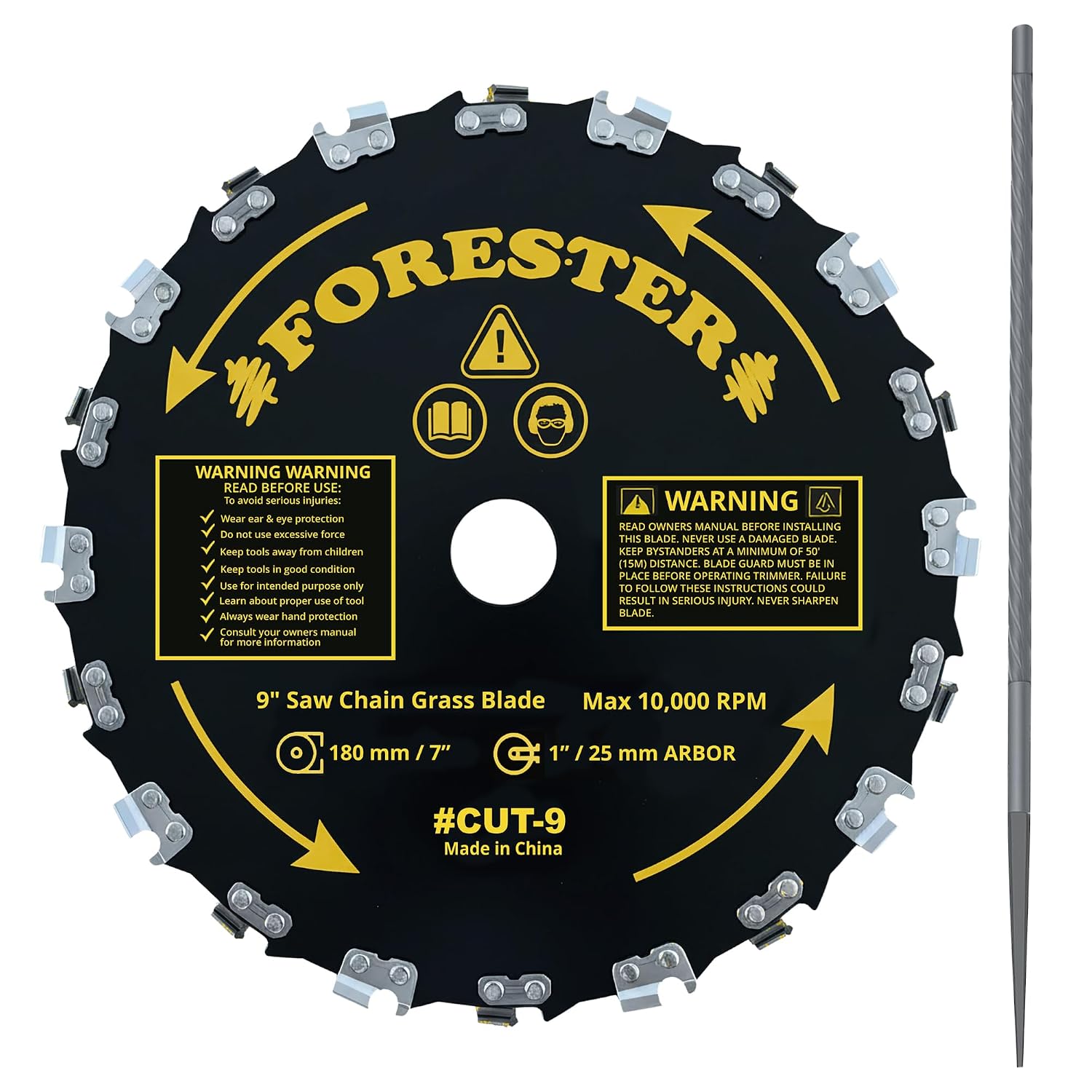
Thick brush and small trees up to 2.5 inches can be a real chore, but the Forester 9 20T Chainsaw Brush Cutter Blade handles these tough jobs with ease. It suits those needing a heavy-duty blade for straight shaft trimmers that cuts through dense weeds and saplings quickly.
Setting it up requires checking the shaft type since it fits most straight shaft trimmers but not curved or electric ones. It has a 1-inch arbor hole and comes with a 20mm bushing to help with fit.
A conversion kit is necessary if the trimmer isn’t already set up as a brush cutter. Routine use includes occasional filing with the included file set to keep teeth sharp.
The chainsaw-style teeth make short work of thick undergrowth. It’s solidly built and designed to slice through tough vegetation reliably. The heaviest praise lies in its power to cut thick brush efficiently.
Most common complaint concerns needing a separate adapter kit for many setups, which can be inconvenient.
The blade cuts through thick brush and small trees easily, making heavy-duty clearing faster. Many find needing a separate conversion kit tricky, adding extra steps before use.
People with straight shaft brush cutters who want serious cutting power will be pleased. Those with curved or electric trimmers should look for blades designed explicitly for those machines instead.
Pros
- Powerful chainsaw tooth design
- Includes file set for maintenance
- Fits most straight shaft trimmers
- 20mm bushing for versatile fit
Cons
- Not compatible with curved or electric trimmers
- Conversion kit often required separately
| Specification | Details |
|---|---|
| Brand Name | FORESTER |
| Model | Paubea123 |
| Fits Trimmer Type | Most straight shaft trimmers |
| Arbor Hole Size | 1 inch |
| Includes | 20mm bushing and file set |
| Cutting Capacity | Small trees up to 2.5 inches thick |
6. FourShow 9-Piece Brush Cutter Replacement Blades

Providing a 17-inch cutting width, these replacement blades work well with battery-powered weed eaters, ideal for managing thick weeds and dense brush. The set suits anyone needing durable, sharp blades that fit Weed Warrior and similar heads perfectly.
Installing the blades onto compatible Weed Warrior, Shakespeare, or Rino Tuff brush cutter heads is straightforward. The mix of plastic and metal keeps them light enough for easy handling and adds toughness for repeated use.
The serrated edges slice through heavy vegetation without bogging down, making everyday trimming less of a chore.
Cutting through brush and thick weeds feels effective thanks to the sharp, serrated blade edges. They maintain a good balance of durability from both materials but occasionally customers mention that the plastic parts can wear faster than expected.
The set offers reliable performance consistent with battery-powered tools, with the most common issue being blade longevity on very tough jobs.
Many appreciate how effectively the serrated edges handle dense vegetation, making trimming smoother. Some users, however, note the plastic components may not last as long under the toughest conditions, requiring more frequent replacements.
This set fits well for those with Weed Warrior, Shakespeare, or Rino Tuff brush cutters who want a ready pack of sharp blades. Those tackling very heavy-duty work might want to consider metal-only options for longer blade life.
Pros
- Compatible with multiple brush cutter brands
- Sharp serrated edges cut thick weeds easily
- Combination of plastic and metal offers durability
- Lightweight for easier handling
Cons
- Plastic parts can wear down with heavy use
- Only suitable for battery-powered units
| Specification | Details |
|---|---|
| Power Source | Battery Powered |
| Cutting width | 17 inches |
| Material | Plastic + Metal |
| Length | 10 cm |
| Pack Size | 9 blades |
7. Carbide Steel Brush Cutter Blade with Adapter Attachment

Ideal for anyone tackling tough brushwood and dense undergrowth, this blade suits those who need reliable cutting power. Its biggest strength lies in the carbide steel construction, making it tough enough to handle briers, saplings, and thick grass without wearing down quickly.
Setup is straightforward with the included two sets of universal adapters, compatible with straight shaft weed eaters from Husqvarna, Stihl, Oregon, and Hitachi. The blade installs easily on 1” or 20 mm arbors, making it quick to swap out.
Daily use benefits from the 10” diameter, which is just right for mulching and clearing heavy vegetation smoothly.
The blade cuts through heavy brush and vines with solid efficiency thanks to its carbide steel. It is built sturdily and designed to last through many seasons of hard work.
Most praise highlights how durable and sharp the blade remains over time, while the few complaints mention the weight, which some find a bit heavy at 2.51 pounds for extended use.
Durability stands out as the blade’s main advantage, with carbide steel holding up well against tough plants. The common downside is its weight, which can make long periods of work more tiring. It handles thick brush and weeds effectively without dulling quickly.
This blade fits anyone using a straight shaft weed eater who needs to clear heavy undergrowth. People looking for a lighter blade or those with curved shaft trimmers might want to consider other options better suited to those needs.
Pros
- Durable carbide steel construction
- Compatible with multiple trimmer brands
- Good size for mulching brush and grass
- Includes two adapter sets for easy installation
Cons
- Relatively heavy at 2.51 pounds
- Only for straight shaft trimmers
| Specification | Details |
|---|---|
| Product Dimensions | 10.67 x 9.45 x 2.4 inches |
| Item Weight | 2.51 pounds |
| Diameter | 10 inches |
| Compatible Arbor Size | 1″ (25.4 mm) or 20 mm |
| Material | Carbide steel |
8. Weed Warrior Brush Cutter Replacement Blades (3 Pack)

Sharp serrated edges make these replacement blades stand out, designed specifically for cutting through dense brush and thick weeds. Perfect for anyone using brush cutter heads on Weed Warrior, Shakespeare, or Rino Tuff trimmers looking to restore their tool’s cutting power.
Installation is straightforward since the blades are made to fit certain brush cutter trimmer heads directly. Once attached, their durable metal construction handles heavy use without bending or dulling quickly.
The blades meet ANSI safety standards, giving confidence during regular yard maintenance and tough clearing jobs.
Performance excels when handling dense vegetation thanks to the sharp, serrated edges. Made from durable metal, these blades hold up well under demanding conditions. The strongest praise highlights their cutting ability and durability.
Some users note the slow wear over time as a minor downside, which is expected with heavy use.
Strong cutting performance and long-lasting metal build receive the most praise. Wear over time is expected but noted as the primary complaint, especially for intensive brush cutter work.
People needing reliable, compatible replacement blades for Weed Warrior or similar heads will find these blades suitable. Those looking for multiple blades in one purchase or expecting faster blade replacement might want to look elsewhere.
Pros
- Sharp serrated edges cut thick weeds easily
- Durable metal construction for long use
- Meets ANSI safety standards
- Compatible with multiple trimmer brands
Cons
- Blades wear slowly with heavy use
- Sold as single units, not in packs
| Specification | Details |
|---|---|
| Brand Name | WEED WARRIOR |
| Manufacturer | Weed Warrior |
| Model Number | 70279A |
| Unit Count | 1 Count |
| Manufacturer Part Number | 70279A |
| Included Components | Weed Warrior Brush Cutter Replacement Blades for Brush Cutter |
9. 10 3T Steel Brush Cutter Trimmer Blade (1 Pack)

Pool Supply Town’s 10 3T Steel Brush Cutter Trimmer Blade suits anyone needing serious cutting power for brushwood and dense grass. Its biggest strength lies in handling tough weeds and thick bushes without bogging down or dulling too fast.
Installing the blade on a weed eater with either a 1 (25.4 mm) or 20 mm arbor is straightforward, making setup painless. At 255 mm (10 inches) diameter and 3.0 mm thick, it balances cutting width and durability well. Regular cleaning isn’t complicated due to its simple steel design, and its 16-ounce weight keeps the trimmer manageable during long tasks.
Cutting through thick brush and weeds happens smoothly, with the 3-tooth design slicing efficiently through heavy undergrowth. The build uses solid steel, which contributes to a sturdy feel but occasionally leads to blade wear when handling very tough material. Most praise focuses on its strong cut performance, while the main complaint points to blade dulling under exceptionally brutal conditions.
Performance on thick brush is strong thanks to the 3-tooth design and solid steel construction. Some users notice the blade wearing down faster than expected when repeatedly cutting through very tough or woody plants. The 16-ounce weight helps keep the trimmer easy to handle despite the blade’s thickness.
Ideal for gardeners and landscapers tackling dense weeds and brush where sturdiness matters. Those needing longer-lasting blades for rocky or heavily woody areas might want to check alternatives built specifically for extreme toughness or multi-packs for frequent replacement.
Pros
- Fits common arbor sizes easily
- Good at cutting dense grass and brushwood
- Heavy-duty 3.0 mm thick steel blade
- Relatively lightweight at 16 ounces
Cons
- Dulls faster under extremely tough conditions
- Only comes as single blade pack
| Specification | Details |
|---|---|
| Diameter | 255 mm (10 inches) |
| Thickness | 3.0 mm |
| Arbor Fit | 1″ (25.4 mm) or 20 mm |
| Item Weight | 16 ounces |
| Model Number | AT0706-1 |
| Package Dimensions | 12 x 9.5 x 1 inches |
10. 10 80T Carbide Tip Brush Cutter Blades (2 Pack)

Cutting through dense brush feels smoother and requires less effort with these 10” carbide tip blades. Designed for straight shaft trimmers, they suit those who want durability combined with a powerful, precise cut.
Their biggest strength lies in how easily they slice through weeds without constantly forcing the tool.
Installation is straightforward thanks to the 10” x 1 arbor size, fitting many popular brands like Husqvarna and Stihl. Daily use feels reliable as the heat- and rust-resistant carbon steel holds up well against tough, overgrown areas. The two-pack ensures you have a backup ready when one blade dulls, meaning less downtime on the job.
Performance stays sharp longer than many other blades due to the high-grade material, cutting through weeds and pruning tasks smoothly. The 80 teeth arrangement gives a clean cut that reduces the strain on your trimmer.
Most praise focuses on the blade’s durability and ease of cutting. Some mention the blades only fitting straight shaft trimmers, limiting compatibility.
The blade cuts like butter with minimal effort, thanks to the fine 80-tooth carbide tips. It stands out for durability, lasting significantly longer than some alternatives. Common complaints focus on its compatibility limited to straight shaft trimmers, preventing use with curved shafts or certain electric models.
Users with straight shaft gas or electric trimmers from brands like Husqvarna or Stihl will find these blades a solid fit and long-lasting tool. Those using curved shaft or different arbor-sized trimmers should consider blades designed for those setups instead.
Pros
- Fits popular straight shaft trimmers
- Heat and rust resistant carbon steel
- Requires less pressure when cutting
- Two blades included per pack
Cons
- Only compatible with straight shaft trimmers
- May not fit electric trimmers with different arbors
| Specification | Details |
|---|---|
| Brand Name | AR-PRO |
| Model | 10″ x 80T Blades |
| Number of Items | 2 |
| Arbor Size | 10’’ x 1″ |
| Material | Heat and rust resistant carbon steel |
11. Brush Cutter Blade Set with Universal Adapter Kit

Great for those who need a tough blade for heavy brush clearing, this kit fits a variety of straight-shaft trimmers and weed eaters. Its main advantage lies in the universal adapter kits, allowing use with many popular brands without compatibility issues.
Setup takes just a few minutes, thanks to the included adapter kits and washers. The 1-inch center bore fits most standard gearboxes, making it easy to swap on straight-shaft trimmers. Handling shows it’s designed to be sturdy but manageable, and the 10 3-tooth blade clears grass and brush quickly without needing frequent adjustments or replacements.
Cutting through thick weeds and branches is where the carbon steel blade really excels, delivering fast and aggressive clearing. It’s solidly built but carries some weight at just over 3 pounds, which might feel noticeable during extended use. Praise often highlights its strong cutting ability and fit.
On the downside, some mention the blade’s weight as tiring over long periods.
Users often praise how well the blade handles thick weeds and branches with little trouble. The universal adapters make it convenient for many tools, but the blade’s weight frequently stands out as a drawback, especially during longer cutting sessions.
Anyone needing a strong blade for heavy brush on a compatible shaft will find this set suits them well. Those seeking a lighter, easier-to-handle option for short or lighter jobs might prefer a different blade designed specifically for agility and comfort.
Pros
- Fits various brands with included adapters
- Strong, fast cutting on heavy brush
- Durable carbon steel construction
- Simple to install on straight-shaft trimmers
Cons
- Heavier than lightweight brush cutter blades
- May tire the user during extended jobs
| Specification | Details |
|---|---|
| Product Dimensions | 5 x 5 x 1 inches |
| Item Weight | 3.09 pounds |
| Center Bore | 1 inch (25.4 mm) |
| Blade Size | 10 inches |
| Teeth | 3-tooth carbon steel |
12. 9 36T Carbide Tip Brush Cutter Blades with Adapter Kits (2 Pack)

Carbide tips and a design meant for gas-powered trimmers make these blades a solid option for tougher cutting jobs. They suit those with gas-powered brush cutters who need a blade that stays sharp longer and handles thick weeds without slowing down. The biggest strength lies in their durability and compatibility with high-torque machines.
Setup includes a comprehensive adapter kit tailored for different trimmer models, including Stihl and most straight shaft types. The mounting process is detailed with washers, nuts, and rider plates for a secure fit. Daily use benefits from the 9-inch diameter and 36 teeth that slice through vegetation efficiently while keeping balance thanks to the precise fit the adapters provide.
Performance stands out by making cutting thick brush less of a chore, supported by the carbide tips that hold up well against wear. The solid build ensures stability on high-speed gas-powered tools.
Strong praise centers on the long-lasting sharpness, while a common complaint highlights its incompatibility with electric trimmers, limiting its use.
The carbide tips are praised for staying sharp through tough use, making thick brush cutting easier and quicker. Common feedback notes its incompatibility with electric models, which some find limiting if they don’t own gas-powered equipment. Everyday use shows it handles demanding conditions but only on matching power sources.
Users with gas-powered trimmers who regularly cut dense weeds will find this blade convenient and long-lasting. Those relying on electric or battery brush cutters should look for alternatives. The included adapter kits make it versatile within its category, but checking power source compatibility is essential before purchase.
Pros
- Durable carbide tips maintain sharpness
- Complete adapter kits for different trimmers
- Designed for high torque gas-powered machines
- 36 teeth provide clean cutting performance
Cons
- Not compatible with electric trimmers
- Relatively heavy at 2.44 pounds per pack
| Specification | Details |
|---|---|
| Diameter | 9inch/230mm |
| Teeth Count | 36 |
| Arbor Bore Size | 1inch/25.4mm |
| Package Content | 2 Sets with adapter kits for Stihl and straight shaft trimmers |
| Weight | 2.44 pounds |
Best Brush Cutter Blades for Weed Eaters Compared
| Product | Size | Weight | Teeth Count | Manufacturer |
|---|---|---|---|---|
| HK 9 36T Carbide Blades | 9 inches | 2.27 pounds | 36T | HK |
| HK 9 36T Carbide Blades | 9 inches | 2.42 pounds | 36T | HK |
| 3-in-1 Brush Cutter Set | 10 inches | 3.67 pounds | 3-in-1 set | Bravko |
| HK 9 36T Blades Adapter | 9 inches | – | Adapter blade | HK |
| Forester 9 20T Chainsaw Blade | 9 inches | – | 20T | Forester |
| FourShow 9-Piece Blade Set | 17 inches | – | 9-piece set | FourShow |
| Carbide Steel Blade Adapter | 10.67 inches | 2.51 pounds | Steel blade | Eapele |
| Weed Warrior 3-Pack Blades | – | – | 3-pack blades | Weed Warrior |
| 10 3T Steel Trimmer Blade | 10 inches | 16 ounces | 3T | Pool Supply Town |
| 10 80T Carbide Blades | 10 inches | – | 80T (2 pack) | AR-PRO |
| Universal Adapter Blade Set | 5 inches | 3.09 pounds | Adapter set | ZMCYNG |
| HK 9 36T Adapter Blades | 9 inches | 2.44 pounds | 36T adapter | TEWORDA |
- Size9 inches
- Weight2.27 pounds
- Teeth Count36T
- ManufacturerHK
- Size9 inches
- Weight2.42 pounds
- Teeth Count36T
- ManufacturerHK
- Size10 inches
- Weight3.67 pounds
- Teeth Count3-in-1 set
- ManufacturerBravko
- Size9 inches
- Weight–
- Teeth CountAdapter blade
- ManufacturerHK
- Size9 inches
- Weight–
- Teeth Count20T
- ManufacturerForester
- Size17 inches
- Weight–
- Teeth Count9-piece set
- ManufacturerFourShow
- Size10.67 inches
- Weight2.51 pounds
- Teeth CountSteel blade
- ManufacturerEapele
- Size–
- Weight–
- Teeth Count3-pack blades
- ManufacturerWeed Warrior
- Size10 inches
- Weight16 ounces
- Teeth Count3T
- ManufacturerPool Supply Town
- Size10 inches
- Weight–
- Teeth Count80T (2 pack)
- ManufacturerAR-PRO
- Size5 inches
- Weight3.09 pounds
- Teeth CountAdapter set
- ManufacturerZMCYNG
- Size9 inches
- Weight2.44 pounds
- Teeth Count36T adapter
- ManufacturerTEWORDA
How to Choose the Right Brush Cutter Blade
Choosing the right brush cutter blade depends on the type of vegetation, blade material, and compatibility with your weed eater. Selecting the appropriate blade ensures efficient cutting, reduces wear and tear, and prevents damage to your equipment, ultimately saving time, money, and effort in maintenance and replacement.
Compatibility and Fit
Having a blade that doesn’t fit your tool can turn a simple yard job into a frustrating experience. Many end up with blades that either don’t attach securely or stick out too far, causing imbalanced operation and potential damage.
Checking the shaft diameter of the tool against the blade’s mounting hole is crucial, common sizes are 25.4mm or 26mm, but this varies. Some blades need adapter plates, which must be compatible with both the blade and the shaft.
Blade diameter should also align with what the tool can handle, typically between 8 and 14 inches. A blade that’s too large overloads the motor, while a smaller one limits cutting efficiency. Matching these specs ensures smooth installation and efficient cutting without risking damage or excessive wear.
Blade Material and Durability
Blades made from high-quality steel hold up better against frequent impacts with stones or thick branches. Cheaper steel or unalloyed metals tend to wear down quickly, bend, or chip, especially when used on tougher vegetation.
Look for blades that mention heat treatment or hardening processes; these improve toughness and edge retention.
Coatings like black oxide or anti-rust layers can extend the blade’s life by reducing corrosion, especially if the tool is stored outdoors or in humid locations. Reinforced alloys are more resistant to breaking under heavy use, which is essential for anyone cutting dense brush regularly.
Cutting Performance and Design
Blade tooth design makes a big difference in cutting effectiveness. Large, aggressive teeth cut through thick brush faster but might tear light weeds unevenly.
Smaller, more teeth typically result in smoother cuts, but they can clog easily if the debris doesn’t clear well.
Common sizes range around 3 to 12 teeth per blade, depending on the intended use, ranging from trimming light grass to handling woody shrubs. Some blades feature angled or offset teeth to prevent clogging and allow debris to clear more easily, which keeps the blade running smoothly without frequent stops for cleaning.
Safety and Operational Features
Vibrations from an unbalanced blade feel immediately and cause muscle fatigue and hand discomfort. Blades designed with proper weight distribution reduce this issue significantly. Some also come with anti-kickback features to prevent dangerous sudden jerks during operation.
Safety guards should fit securely over the blade to protect the operator from flying debris. Confirm that the blade meets standards for power tools used in landscaping, such as ANSI or CE certification.
This means it has been tested for predictable performance and safety in real-world tasks.
Maintenance and Ease of Cleaning
Having a blade that is easy to remove simplifies cleaning and maintenance. Blades prone to sticking due to rust or tight mounts slow down the whole job and increase wear on the tool. Designs that minimize notches or gaps between teeth reduce debris buildup, making post-cut cleaning faster.
Sharpening should be straightforward with common tools like files or sharpening stones, and replacement blades should be readily available at reasonable prices. This keeps maintenance simple and costs down, especially for users who cut weeds frequently throughout the season.
How to Safely Install and Replace Brush Cutter Blades
Before handling the blade, disconnect the weed eater from any power source to prevent accidental starts. Use a sturdy wrench to loosen the bolt holding the blade in place.
Often, there is a locking mechanism or a blade lock button you need to engage to keep the blade stationary while you work. Removing the old blade may require some effort if debris or rust has accumulated. Clean that area thoroughly before placing the new blade.
Align the new blade carefully with the mounting hole and tighten the bolt securely, but avoid over-tightening, which can strip the threads or damage the blade. Wearing heavy-duty gloves is important throughout this process to protect your hands from sharp edges. Double-check the blade’s balance and secure fit before reconnecting power.
Testing the cutter at low speed after installation ensures the blade is properly seated and not wobbling.
Top Maintenance Practices to Prolong the Life of Your Brush Cutter Blade
Keep the brush cutter blade sharp by regularly filing or using a bench grinder to maintain a clean cutting edge. Dull blades strain the engine and reduce cutting efficiency. After each use, clean the blade to remove sap, dirt, and plant residue.
Moisture left on the blade can cause rust, so drying the blade thoroughly is essential. Storing the blade in a dry place extends its life.
Check the blade for cracks or chips before use; damaged blades should be replaced immediately to avoid breakage during operation. Lubricate exposed metal surfaces lightly with oil to prevent corrosion during extended storage.
Balancing the blade after sharpening prevents vibration damage to the cutter’s gearbox and ensures smooth operation. Following these simple steps helps the blade perform consistently and last longer.
Comparing Brush Cutter Blades to String Trimmer Heads for Different Weed Types
Brush cutter blades work better on thick, woody, or dense vegetation where string trimmer heads struggle. The rigid metal blades cut through tougher stems more effectively than nylon strings.
However, string trimmer heads are more suitable for fine grass and light weeds, providing cleaner cuts on delicate surfaces. Brush cutter blades require careful handling and more maintenance, including sharpening and checking for damage. String heads are easier to replace and typically lighter, reducing fatigue during use.
For areas with mixed vegetation, some users switch between the two, using blades for heavy growth and strings for regular lawn edges or grass. Cost-wise, string replacements are generally cheaper, but blades last longer under harsh conditions. Each tool has a clear advantage depending on the type and density of the plants being managed.
People Also Asked
How Do I Choose the Right Blade Size for My Weed Eater?
Pick a blade size that matches your weed eater’s specifications, usually found in the manual or on the tool’s label. Larger blades cover more area but can strain smaller engines, so balance size with your machine’s power.
What Safety Precautions Should I Take When Changing Brush Cutter Blades?
Always disconnect the spark plug or power source before changing blades to avoid accidental starts. Wear gloves and use a proper wrench to prevent slipping or cuts during removal and installation.
How Often Should I Replace the Blade on My Weed Eater?
Replace the blade when it becomes dull, chipped, or bent, which can reduce cutting efficiency and strain the motor. Regular visual checks after every few uses help spot damage early.
Can Brush Cutter Blades Damage Certain Types of Grass or Plants?
Blade types can affect plants differently; metal blades can tear or shred grass, leading to brown edges, especially on delicate varieties. Use a blade rated for the plant type, like plastic blades for gentle trimming of softer plants.
What Are the Common Problems with Brush Cutter Blades and How to Fix Them?
Common issues include dullness causing poor cutting and blade wobble from bent or loose blades. Sharpen or replace dull blades and tighten mounting bolts or replace damaged parts to maintain safe operation.
Conclusion
Choosing the right brush cutter blade mostly comes down to blade material, size, and compatibility with your weed eater model. Strong steel blades give better durability for thicker brush.
The size should fit your machine perfectly to avoid issues during use. Pay attention to tooth shape too, as it affects cutting style and maintenance.
Consider how often you plan to use the blade and what types of vegetation you need to cut when making your choice. More frequent use or tougher brush may justify investing in a higher-quality blade.
Check the comparison table above to match details with your requirements and budget before deciding. The picks listed cover a range of needs and setups to make that easier.